
Cheater Cheater
“I’ve been cheating this whole time!” She was shoulder bridging and finding how her hamstring could do the work when she realized is was unlike any shoulder bridge she’d done before. And immediately, she thought she had cheated with her former versions. This is not the first time a client has said this.

This is my first swan on my first day of teacher training at The Pilates Center in 2015. That was the most extension I could get, but it was the best I could do at the time.
I need to clarify that in movement, there really is no cheating. You’re doing the best you can with the ability and knowledge you have.
Your nervous system is only capable of working within the boundaries you’ve set—the strength you have, the movements you’ve explored, the motor programs you’ve rehearsed. Then the brain brilliantly decides to use what is strong, mobile, and familiar. Thank goodness for that! In this way, movement is automated, freeing up the conscious mind so that it can focus on higher order tasks. You don’t have to think about how to get from point A to point B, but rather can think about more complex problems like what you’ll do when you get to point B.
However, in our society, we’re increasingly disconnected from our bodies. The focus is so intensely on our minds (hello standardized curriculum, so long PE!) while the tools available enable the mind to work by sacrificing the body (as I’m doing sitting here to write this post). We work the body less and less so the boundaries on our movement are increasingly narrow, even causing our bodies to signal distress via pain. Clearly our systems need re-education, and Pilates is just the tool for that.
Our job as Pilates teachers is to help bring awareness to your existing patterns and then expand your movement boundaries, teach you new possibilities, and help you reinforce new patterns. Along the way, we should use the method to also teach you self love, acceptance, and then exploration of new ways of moving and using your body. Your nervous system is doing the best it can with the resources it has. Only once you know better and practice it can you do better. But not knowing is not cheating.
How Pilates Boosts Immunity
Joseph Pilates said “I must be right. Never an aspirin. Never injured a day in my life.”
And in the last two years that I’ve been doing exclusively Pilates for exercise, that’s been the case for me too. No colds, stomach bugs, flus. A stark contrast from my usual experience, which was about one cold per month ever since having kids almost 15 years ago.
Legend also says that the men who were interned with Joseph Pilates on the Isle of Man who exercised with him never succumbed to the Influenza Epidemic of 1918 that killed three times more people, most of them young, than WWI.
Let’s talk lymph
The interesting thing about our lymphatic system, through which our immune system flows, is that it is not on a pump like our circulatory system. Lymph relies on movement and muscle contraction to circulate. This means the full body movement found in Pilates is quite helpful to our lymphatic system.
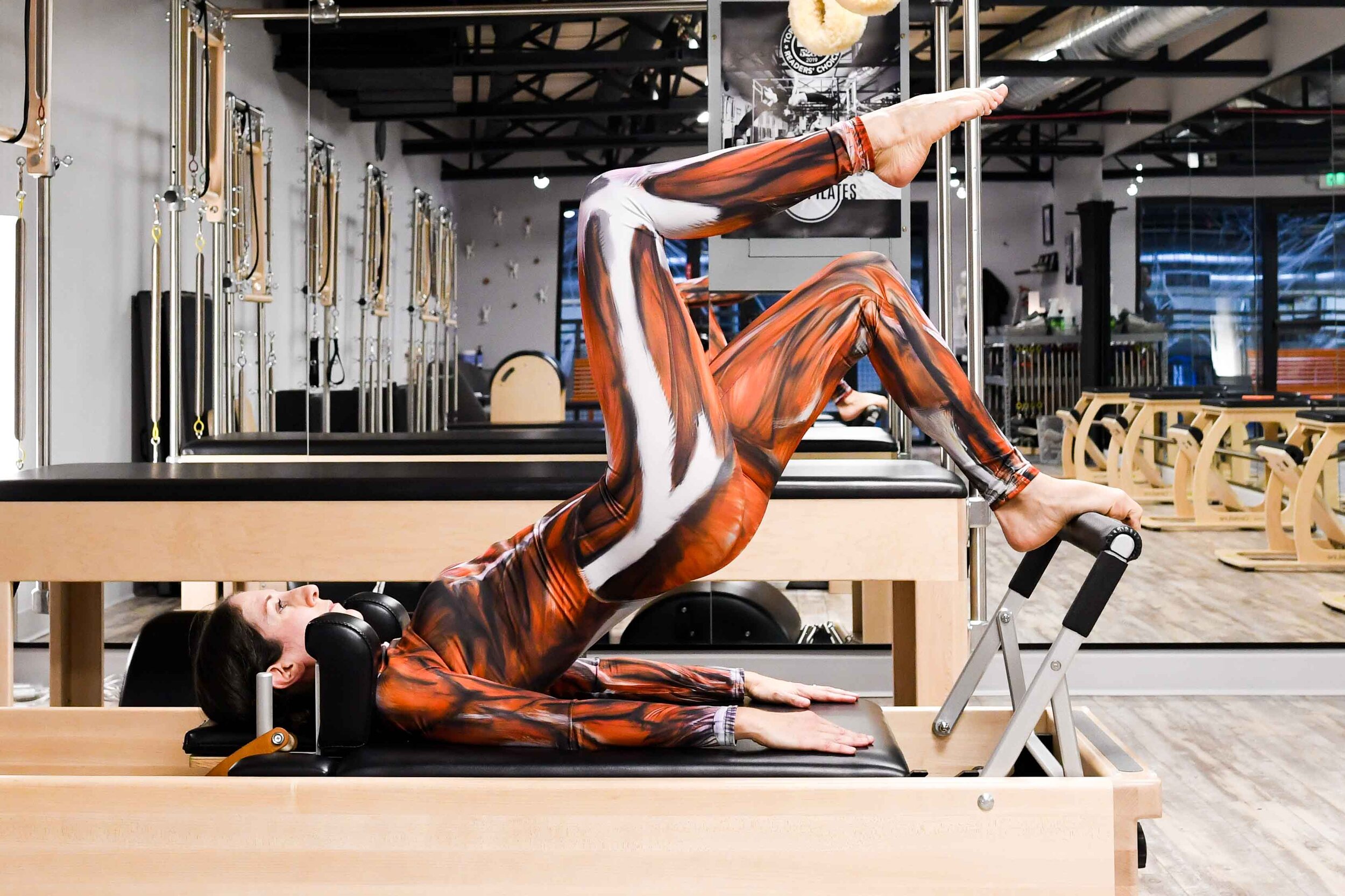
You can imagine how challenging it is to move lymph that collects in the limbs, like our hands and feet. But Pilates further assists this with the reclined position that many exercises have. Take footwork for example--you lay on the reformer and elevate your feet onto the footbar. It’s the perfect position to get lymph traveling from your legs back to your trunk, and the muscle contraction in the feet and legs further facilitate that process.
Lymph collects in nodes where the extremities meet the trunk, such as the groin, armpits and neck. Pilates doesn’t allow these nodes to go neglected. Many exercises create a pumping sensation of these nodes--short spine, stomach massage, rolling like a ball. Squeeze the nodes, move the lymph.
The benefit of gentle movement
Many practitioners enjoy how gentle Pilates is on their body. Of course there are times when you’re sore from the practice (I’ve had clients report that they’re too sore in their abdominals to laugh), but usually we’re working below that threshold. Therefore recovery isn’t so intensive and your body can fight bacteria and viruses instead of always having to repair broken down muscle tissue. This doesn’t mean that your muscles can’t change and get stronger. It just means that the process is more gradual and balanced with other bodily processes.
Whole Body Health
Pilates doesn’t just improve immunity via mechanical and physiological processes. It also improves your health by calming your mind. The emphasis on breathing and mindful movement encourages the fight or flight sympathetic nervous system to quiet, reducing stress which research strongly shows impairs immunity. Regular exercise also improves sleep quality, which is necessary for healthy immune systems.
Brush Away Merrily

Joseph Pilates also suggested regular body brushing, which he generally advised to be done in the shower after exercising. He said “use only a good stiff brush (no handle) since this type of brush forces us to twist, squirm, and contort ourselves in every conceivable way in our attempts to reach every portion of our body… The use of a good stiff brush stimulates circulation, thoroughly cleans out the pores of the skin, and removes dead skin too… So brush away merrily, and heartily too!”
Current research now shows that body brushing, in addition to removing dead skin, increases circulation including that of the lymphatic system. So get yourself an inexpensive body brush and brush away merrily as Joe advised. I recommend doing it dry rather than in the shower, and use short, quick strokes going from the extremities towards the heart. You’ll be pleasantly surprised by how your Pilates practice means you can reach more areas of your body!
Do Pilates
There’s no guarantee that just because you’re doing Pilates regularly, you won’t get sick this cold and flu season. But plenty of anecdotal evidence and common sense suggests that a regular practice (at least 3-4x/week), along with other healthy choices around sleep and nutrition, can set your body up so that it can better fend off illnesses.
Q&A with a Certified Pilates Teacher
A plethora of new fitness options are popping up in Denver, so why consider Pilates?
Classical Pilates is not a trend, but a tried-and-true method of changing your body and life that's been around since the early 1900s. It's lasted so long because it's so highly effective.
What's the difference between Pilates and Barre?
Barre classes, as well as Lagree Fitness classes (like those at Pilates Evolution), tend to focus on muscular endurance through high repetitions of the same movement targeting specific muscles. Classical Pilates believes that the whole body should be challenged in every exercise, and that fewer repetitions is preferable so that form and alignment are not compromised. If you need additional challenge, rather than adding more weight or reps, you learn more difficult exercises.
A plethora of new fitness options are popping up in Denver, so why consider Pilates?
Classical Pilates is not a trend, but a tried-and-true method of changing your body and life that's been around since the early 1900s. It's lasted so long because it's so highly effective.
What's the difference between Pilates and Barre?
Barre classes, as well as Lagree Fitness classes (like those at Pilates Evolution), tend to focus on muscular endurance through high repetitions of the same movement targeting specific muscles. Classical Pilates believes that the whole body should be challenged in every exercise, and that fewer repetitions is preferable so that form and alignment are not compromised. If you need additional challenge, rather than adding more weight or reps, you learn more difficult exercises.
How can you increase strength with so few reps?
Pilates challenges the very definition of strength. Most exercise regimens strengthen our big, gross motor movers (rectus femoris, rectus abdominus, etc.) while completely neglecting muscles involved in posture, smaller muscles surrounding our ball and socket joints, muscles of the feet, etc. When you participate in these types of classes, you tend to strengthen what is already strong and stretch what is already long, reinforcing and exacerbating imbalances. Through good alignment and attention to detail, Pilates teaches how to use all the little (and some not-so-little) postural and supporting muscles, like the transverse abdominus, deep six rotators, and rotator cuff. When all the muscles surrounding a joint work uniformly, strain and injury are avoided and posture improves.
How does Pilates approach flexibility?
Most fitness classes are organized so that strength and flexibility are separate, with participants likely stretching at the end of a class if at all. Pilates combines both goals in each exercise. You lengthen your muscles to their end range, then contract them. The result is that the muscle is stronger not just in the belly, but also at the attachments, where muscles tend to be prone to tearing. This functional flexibility prevents injury.
How can I change my body without working to the point of soreness?
Right now in fitness, it is trendy to work to the point of fatigue and soreness. Pushing a muscle past its capabilities causes lactic acid build-up which leads to soreness, and necessitates rest days for proper recovery. Pilates likes to work below that threshold. We challenge the muscle, but we don't believe in "no pain, no gain." Because we don't break down muscle tissue in Pilates, you can recover quicker and practice it every day. This type of exercise is more gentle on the body, doesn't wear you out, is more sustainable over your lifetime, and promotes healthy immunity. And even though you aren't horribly sore after workouts, you can still significantly change your body.
Can I get a cardiovascular workout with Pilates?
Initially, you must relearn movement patterns and lay a strong foundation for your Pilates practice, so you may move slower as your brain processes a new way of doing things. Once your body is better organized and more balanced, you can pick up the tempo and intensity to challenge yourself even more. Many advanced practitioners of Pilates break a sweat and can receive cardiovascular benefits from doing Pilates at tempo.
Why is Pilates more expensive than other forms of exercise?
Pilates teachers are highly trained. I used to be a Strength and Conditioning Coach (a step above a personal trainer) and that certification required no classes, reading one textbook, and taking an exam. Many aerobics instructors are certified after weekend courses. In stark contrast, most Pilates teachers are required to complete at least 450 hours of training. My program was over 950 hours and took a full year to complete. Pilates instructors are often excellent at correcting form and making appropriate modefications so that you don't hurt yourself while exercising.
Pilates is also performed on specialized, expensive equipment, which also increases the cost of sessions. But Pilates has so much added value, from the highly trained teachers and amazing equipment to the potential to truly change the way you hold yourself and move. It's also one of the most effective ways to reduce musculoskeletal pain. In fact, I have clients who have experienced things like back pain for decades that was resolved in a month or two of Pilates. Some have seen multiples specialists without relief, but found it in Pilates. Pilates is not just a workout, it is a game changer.
Sophia is a Certified Pilates Teacher and owner of Kinesis Pilates, which is opening at the Stanley Marketplace in the Summer of 2017.
Who was Joe?
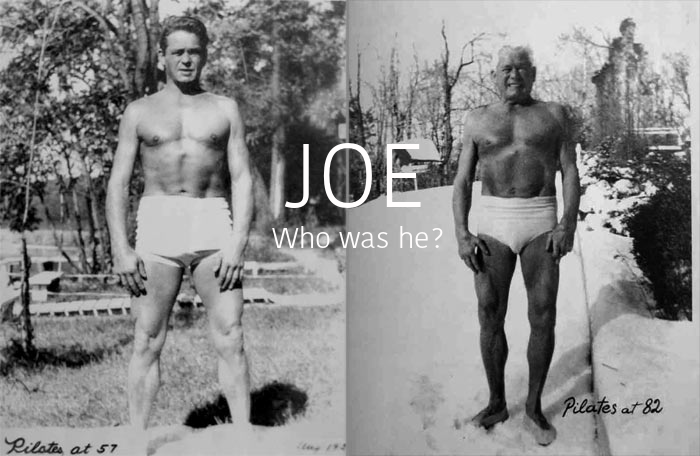
The story of Joseph Pilates is the stuff of legends. He was born in 1883 in Germany, into an impoverished family with many children. He was a sickly child, who was bullied and teased for having the same last name as Pontius Pilate. His father was a prize winning gymnast and his mother was a naturopath. As a child, he received an anatomy book from a family physician and learned every page. He would also lie in the woods for hours, observing how animals moved and especially how the mothers taught their offspring. The careful observation of animal movement, particularly that of cats, greatly impacted him. In addition to anatomy and animals in nature, Joseph Pilates studied a variety of exercise forms, including yoga, Zen, and ancient Greek and Roman regimens. By 14 years of age, his body was so well developed that he began modeling for anatomy charts.

The story of Joseph Pilates is the stuff of legends. He was born in 1883 in Germany, into an impoverished family with many children. He was a sickly child, who was bullied and teased for having the same last name as Pontius Pilate. His father was a prize winning gymnast and his mother was a naturopath. As a child, he received an anatomy book from a family physician and learned every page. He would also lie in the woods for hours, observing how animals moved and especially how the mothers taught their offspring. The careful observation of animal movement, particularly that of cats, greatly impacted him. In addition to anatomy and animals in nature, Joseph Pilates studied a variety of exercise forms, including yoga, Zen, and ancient Greek and Roman regimens. By 14 years of age, his body was so well developed that he began modeling for anatomy charts.
In 1912, he moved to England to train as a boxer. He found a job as a circus performer and within a couple years, was touring with his brother Frederick performing a Roman gladiator act. Then in 1914, he was interned in England in a camp for Germans. There he taught wrestling and self defense and worked as something of a nurse. He began to develop his exercise method, which he called Contrology, as well as devise equipment to rehabilitate internees who were restricted to bed rest (by attaching bed springs to the bed post, the first Cadillac was born). In 1918, a flu pandemic struck, killing more people in one year than the bubonic plague killed in four. Although an estimated 30 to 50 million people died, many of them between the ages of 20 and 40, it is said that Joe prided himself on the fact that none of his trainees died.
In 1925, Joe traveled to the U.S. and met Clara, his partner for the rest of his life, on the ship. She was a kindergarten teacher whose arthritic ankle Joe helped heal. They opened a Pilates studio together in a former boxing gym on 8th Ave in New York City. It has been said that while Joe was the creator, Clara was the teacher, and without her keen ability to teach Pilates, it would not have endured the test of time. Joe and Clara's studio gained notoriety among dancers, many of whom came to see him to heal their injuries. Some of his most well known students, now called the Pilates Elders, came to him because of a significant injury, which he promptly healed through Contrology:
Carola Trier, a roller skating contortionist, saw him for an injured elbow.
Eve Gentry, a dancer who was injured and told by doctors that she needed surgery and would never be able to dance again, claimed that after one session with Joe, she walked out of studio free of the pain that had plagued her for three years. Years later she had a mastectomy and removal of her pectoral muscles. After a year of working with Joe, she could produce movements that doctors thought impossible without pecs.
Kathy Grant, a black dancer trying to make her way in a racially segregated New York City, injured her knee while performing. Joe was able to heal it and enable her to return to dancing.
Ron Fletcher, a dancer and choreographer, also injured his knee. He was advised to see Joe and sure enough, Joe rehabilitated his knee.
Romana Kryzanowka, a classical ballet dancer, saw him for an injured ankle. Joe told her he could fix it in five sessions or he would give her money back.
One of the most well known elders is Romana. Not only did Joe help heal her ankle in only five sessions, but he also took her under his wing. Her father had died when she was five and Joe, having no children with Clara, was like a father to her. She taught alongside him and Clara until his death in 1967, likely from emphysema related to his smoking of cigars. When Clara passed a decade later, Romana continued to run the studio. Gradually, the method’s name shifted from Contrology to Pilates, in respect of its creator.
In 1987, Rachel and Amy Alpers, my teachers, began studying Pilates with Romana in New York. In 1990, they moved to Boulder, Colorado to open The Pilates Center. It was amongst the first Pilates teacher training programs in the world and twenty-five years later, remains one of the gold standards for high quality, classical Pilates education. Rachel and Amy have made it their goal to continue the legacy of Joe’s work in its purest form.

Rachel and Amy Taylor with Romana Kryzanowka in Boulder in 1993.